Menu
PJ Materials Consultants Limited
  • Home
  • About Us
    • Consulting
      • Masonry Conservation
      • Masonry Construction
      • Concrete & Masonry Investigating, Troubleshooting, and Cause Analysis
      • Concrete Construction
      • Concrete Restoration
    • Training
  • Case Studies
    • Case Study #1 Church of Our Lady ~ Tower Restoration
    • Case Study #2 Restoration of a Heritage Art Gallery
    • Case Study #3 Restoration of a National Historical Site Building
    • Case Study #4 Restoration of Reinforced Concrete Lighthouse
    • Case Study #5 Restoration of a Fine Arts Faculty Building
  • Articles
  • Workshop
  • Drone Inspections
  • Published Books
  • Contact Us
  • Blogs
  • Home
  • About Us
    • Consulting
      • Masonry Conservation
      • Masonry Construction
      • Concrete & Masonry Investigating, Troubleshooting, and Cause Analysis
      • Concrete Construction
      • Concrete Restoration
    • Training
  • Case Studies
    • Case Study #1 Church of Our Lady ~ Tower Restoration
    • Case Study #2 Restoration of a Heritage Art Gallery
    • Case Study #3 Restoration of a National Historical Site Building
    • Case Study #4 Restoration of Reinforced Concrete Lighthouse
    • Case Study #5 Restoration of a Fine Arts Faculty Building
  • Articles
  • Workshop
  • Drone Inspections
  • Published Books
  • Contact Us
  • Blogs

Case Study # 1 
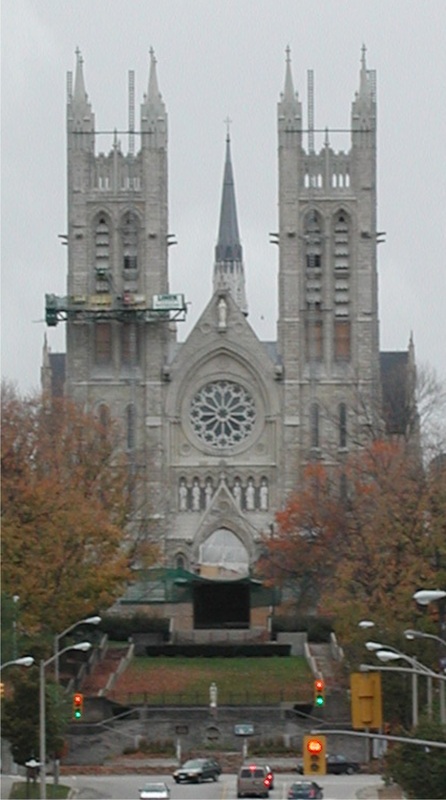
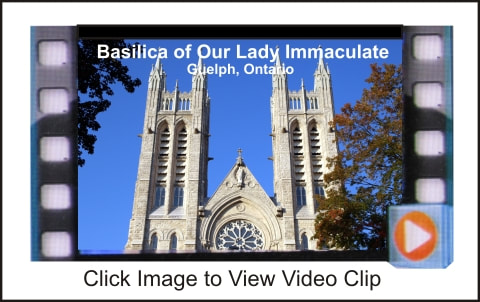
Church of Our Lady, Guelph, Ontario

Problem: 

In 1992/1993, the Church of Lady - a National Historic Site - underwent major restoration. The work included full repointing of masonry joints and the repair or replacement of a considerable number of cracked masonry units. Unfortunately, the full cause of the cracking and damage to the twin towers' masonry was not fully understood at that time and the problems returned within a few years.

In 2007, the challenge was how to restore the towers to a durable condition, while preventing the cracks from re-opening once more.


Picture
Solution: 

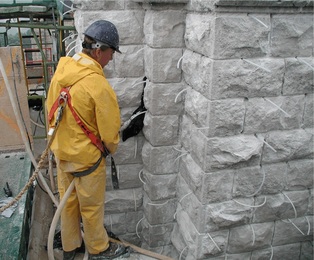
After a thorough investigation, which included the use of ground penetrating radar to confirm the presence of considerable voids hidden within the inner core rubble of the masonry, a strategy was devised that included stabilizing the towers using stainless steel helical masonry ties and filling the voids with a lightweight cellular foam cement grout using low pressure injection methods. A series of structural steel ring beams were also installed within the towers at various levels. The ring beams were designed with sliding joints so that a certain amount of controlled displacement could occur - thus preventing the tower walls from acting in a non-composite manner. Cracks were then repaired.

(NOTE: This case study was highlighted in an article published in Construction Canada. Click here to view the article on-line)
Picture
Picture
About
Contact
Blogs
Linkedin
PJ Materials Consultants was formed by Paul Jeffs in 1989 to provide a wide range of specialist consulting services for concrete and masonry structures. The main business activity is divided between the provision of materials technology expertise and professional development technical training.